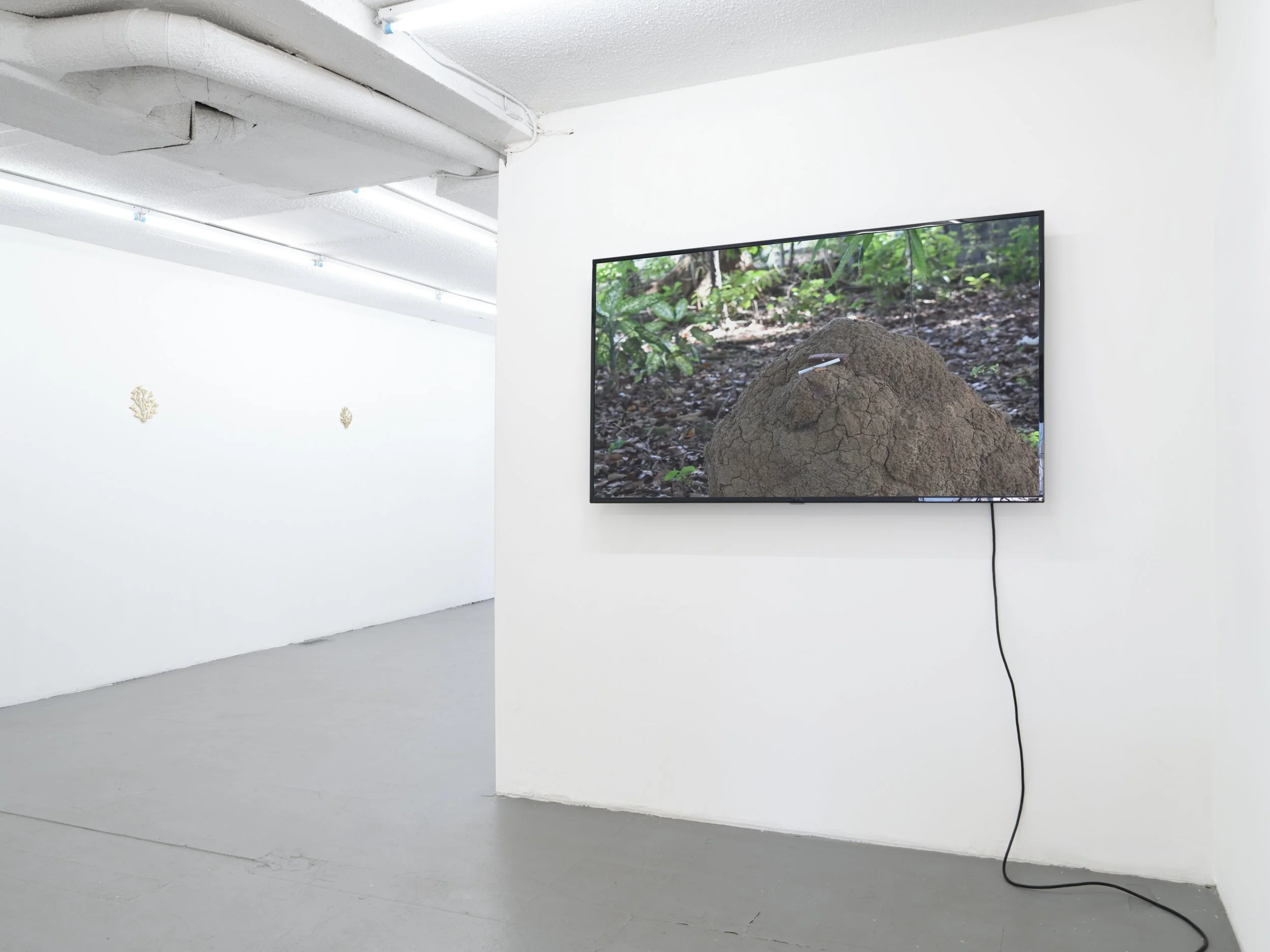
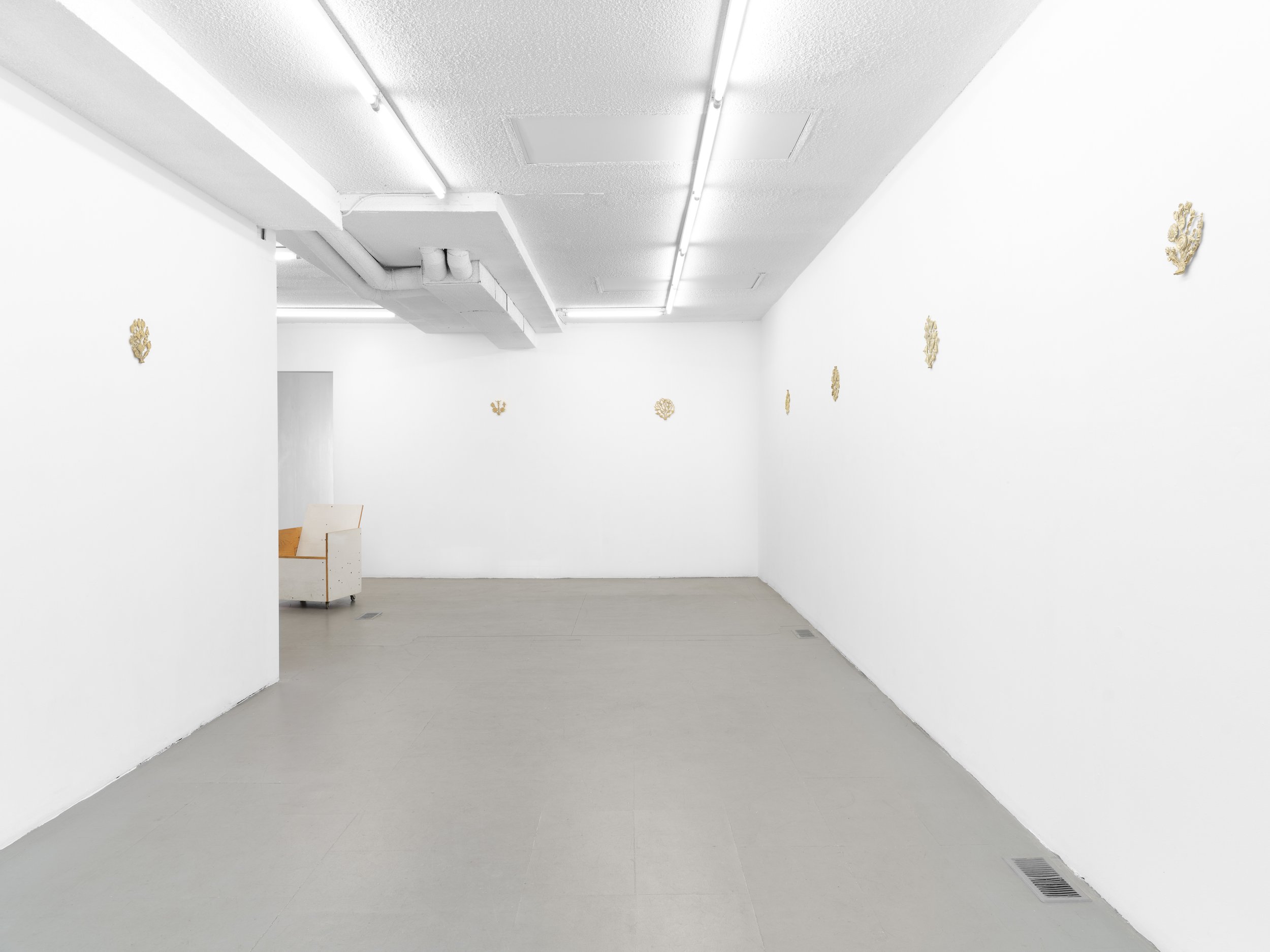
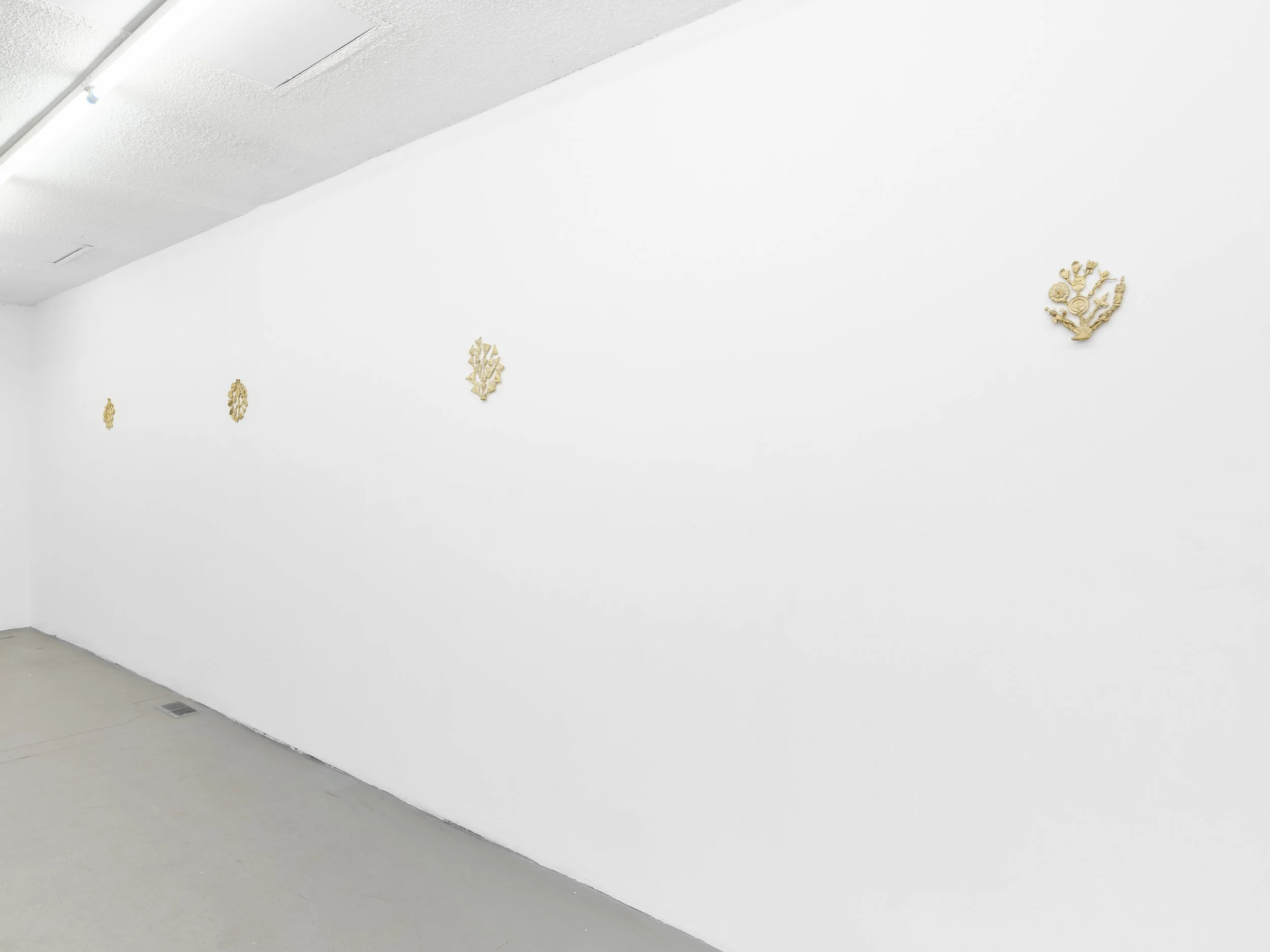
Geography of Ghosts
Patrick Cruz
curated by Jeff Hallbauer
opening reception May 28, 6 - 8 pm
documentation by Dennis Ha
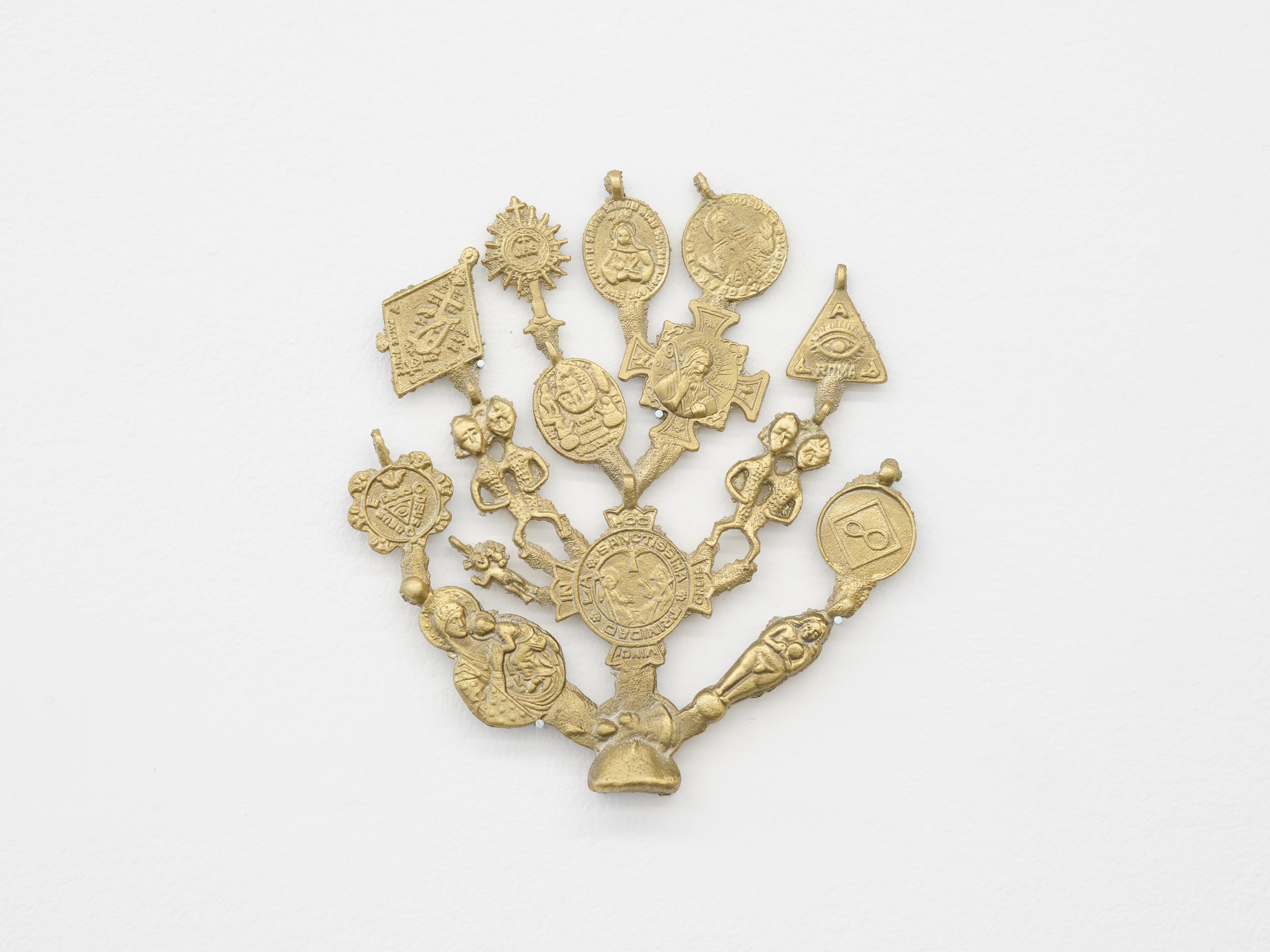
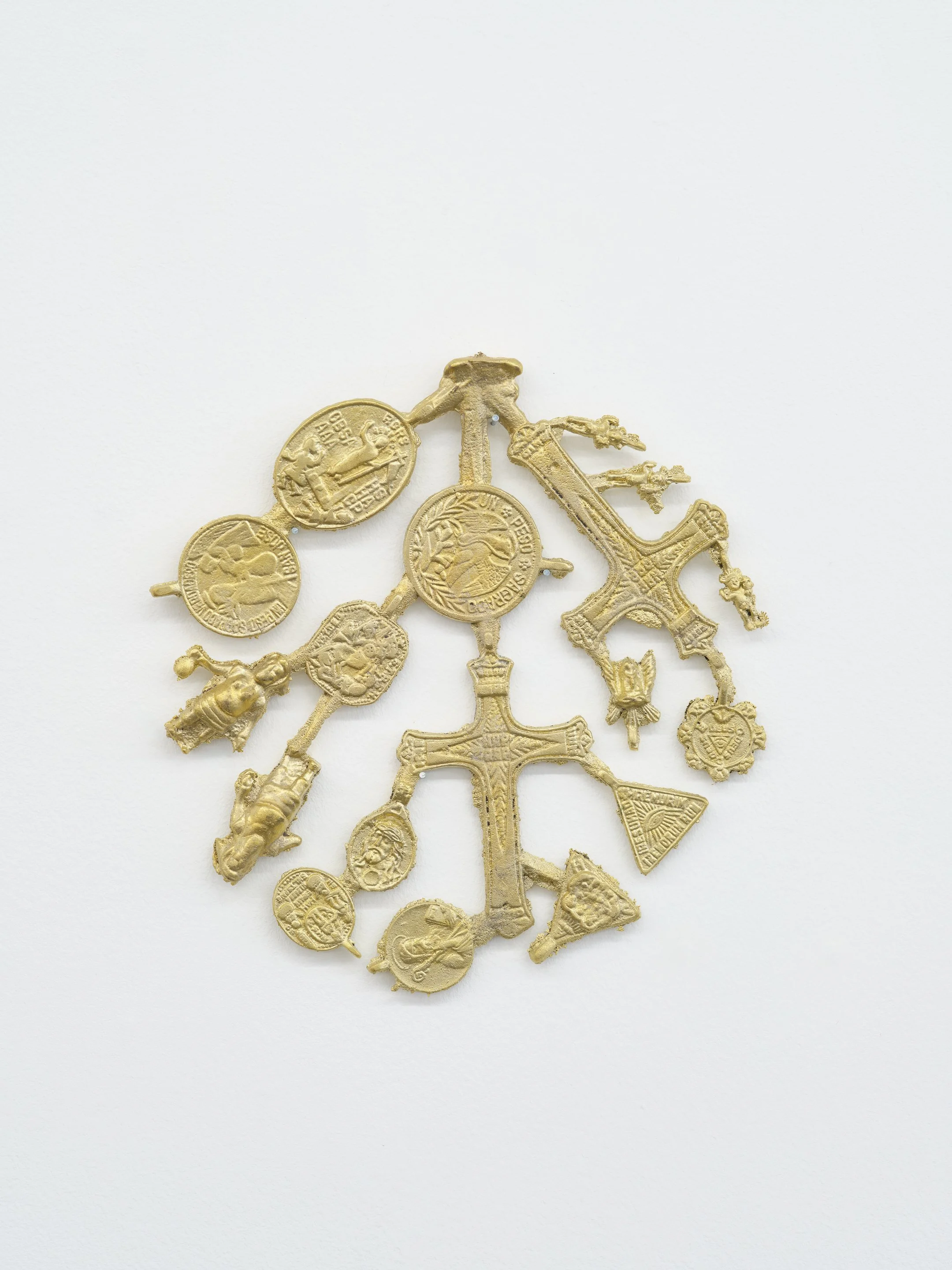
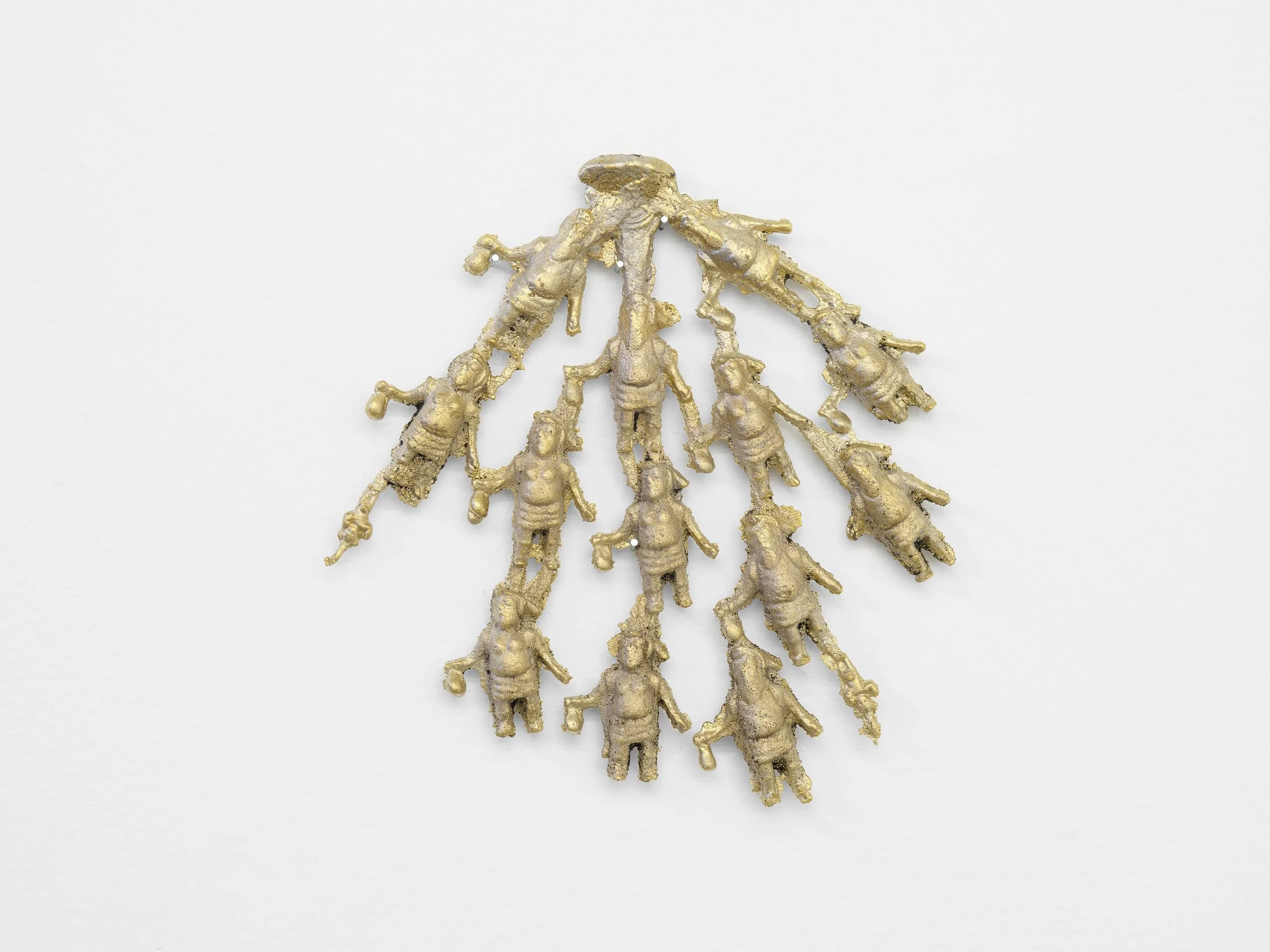
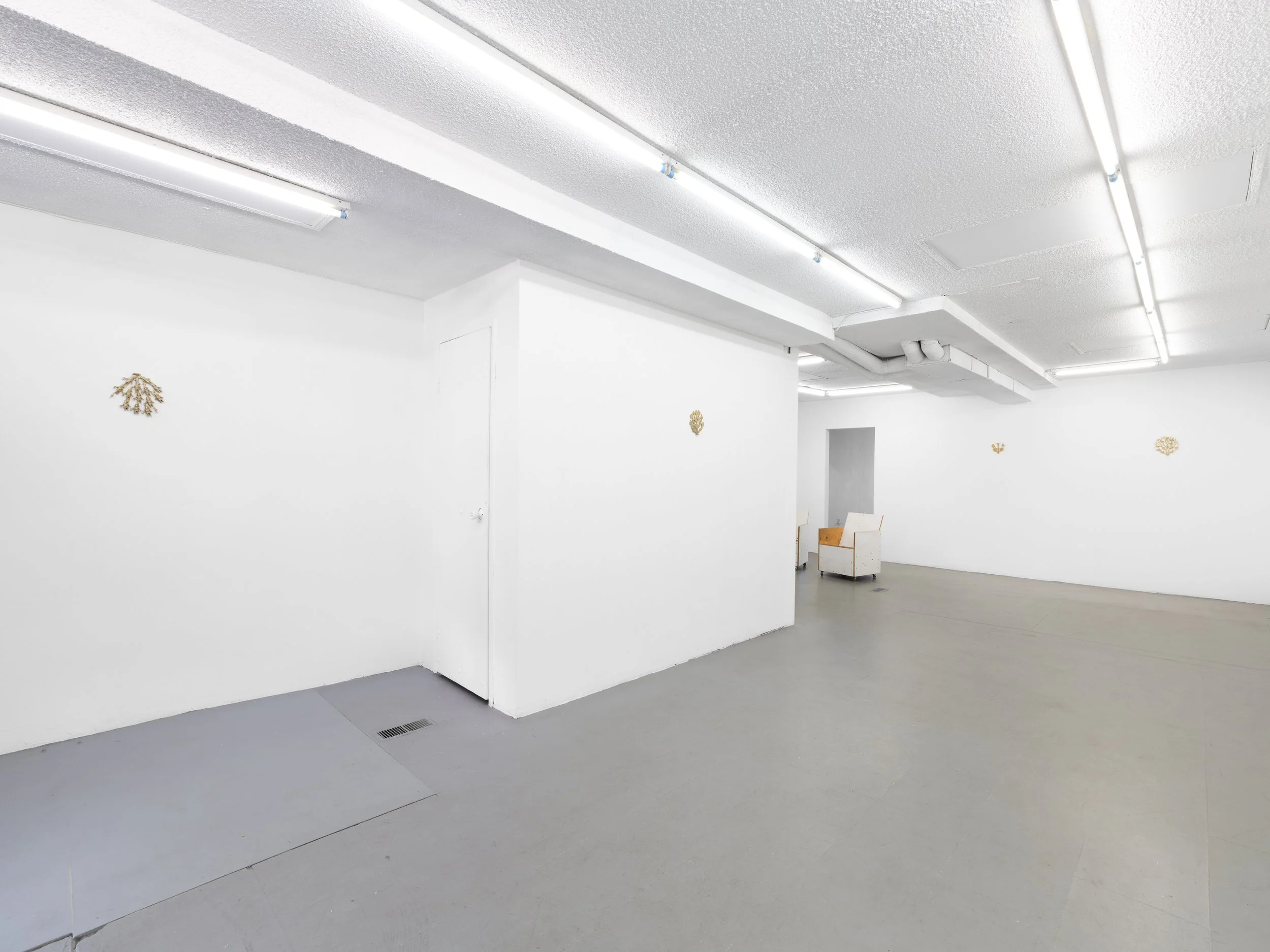
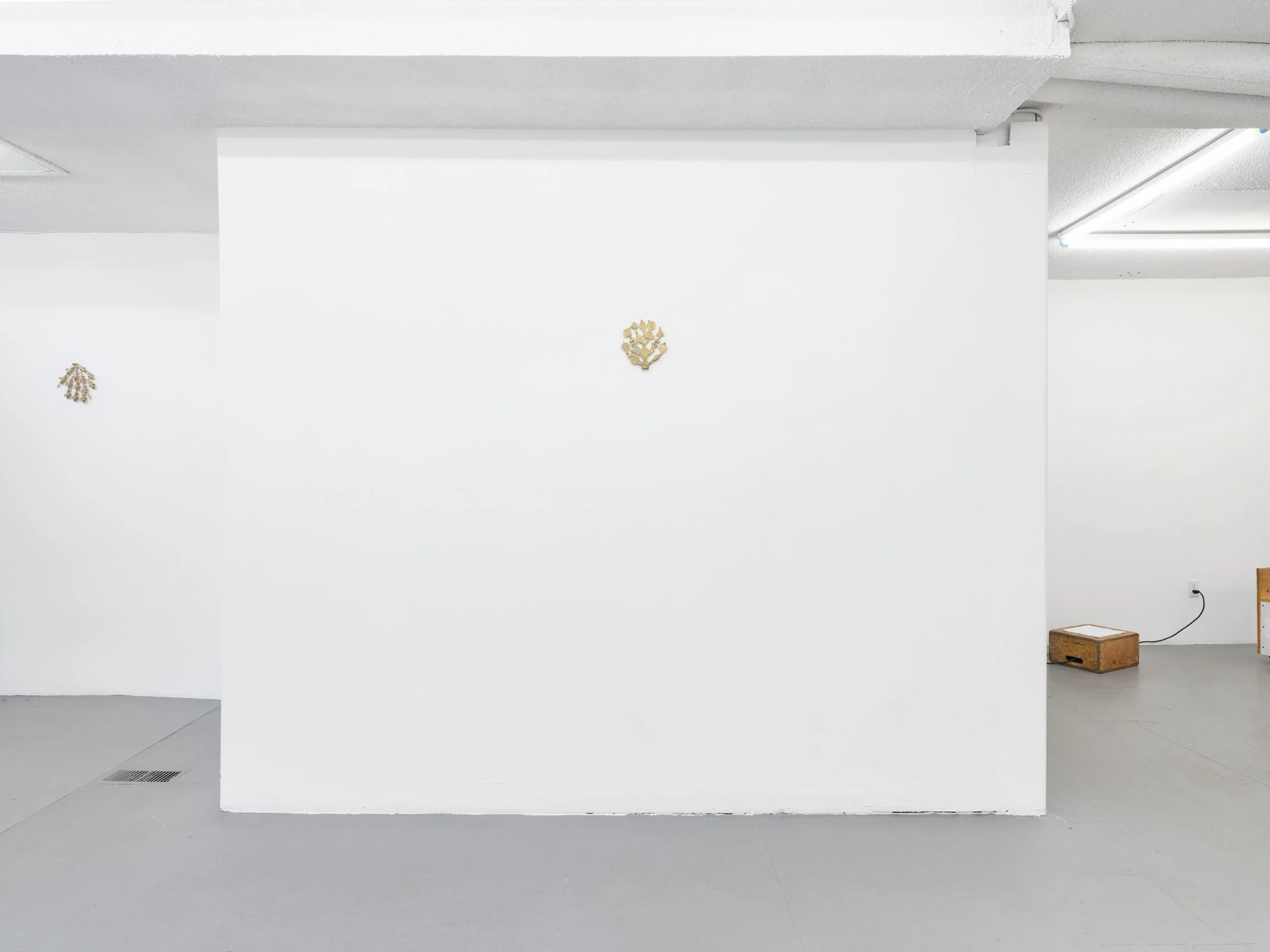
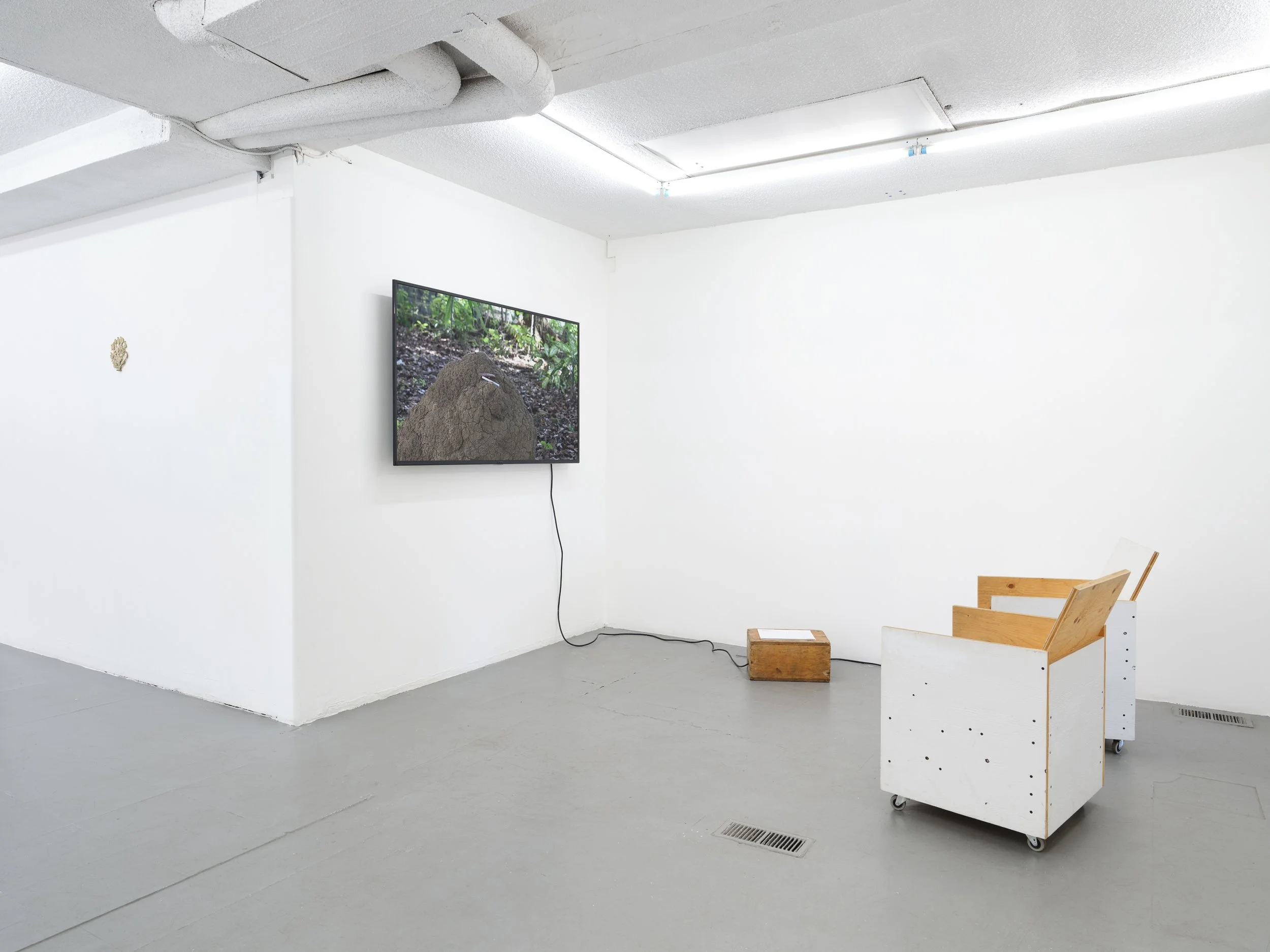
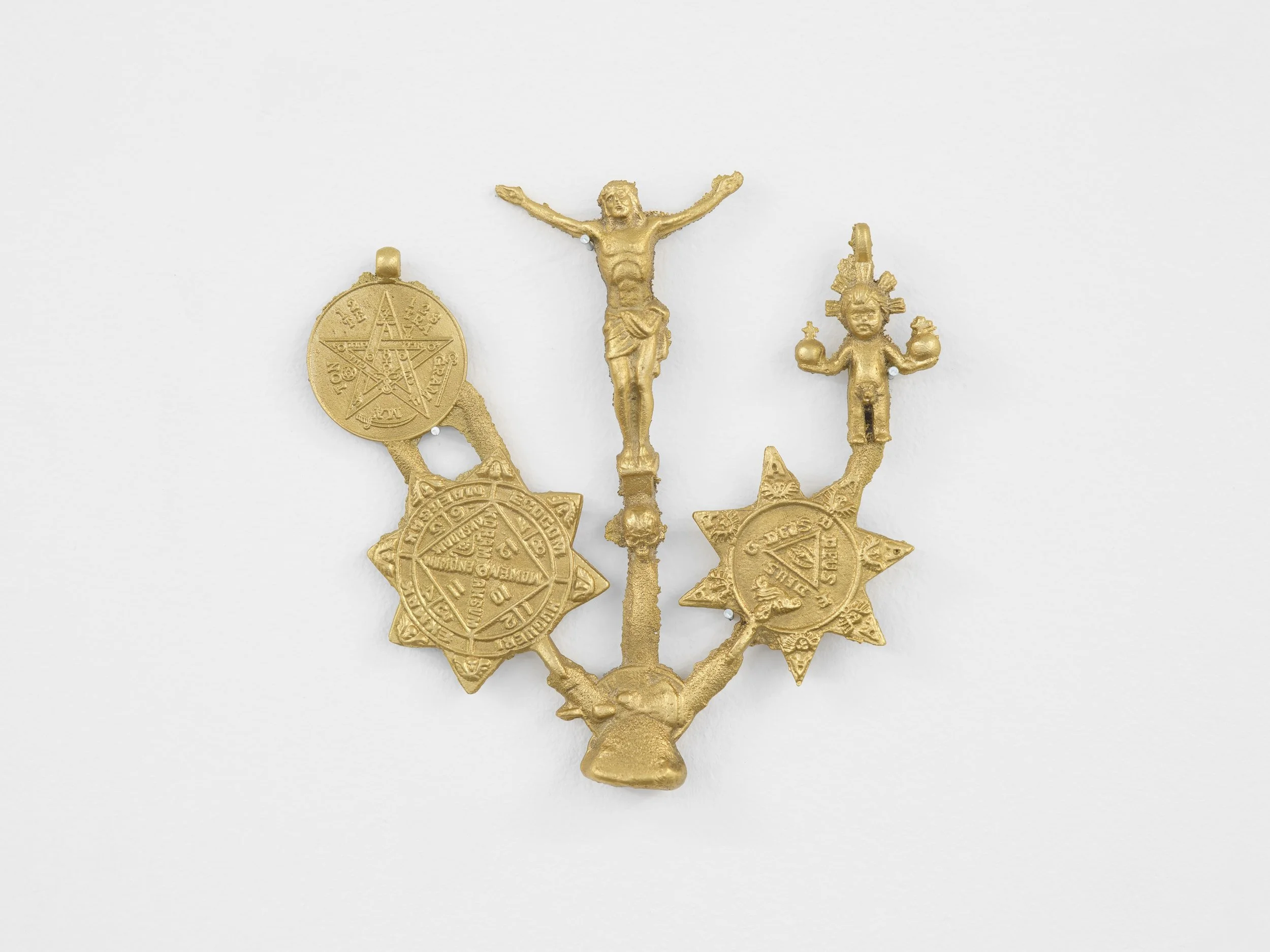
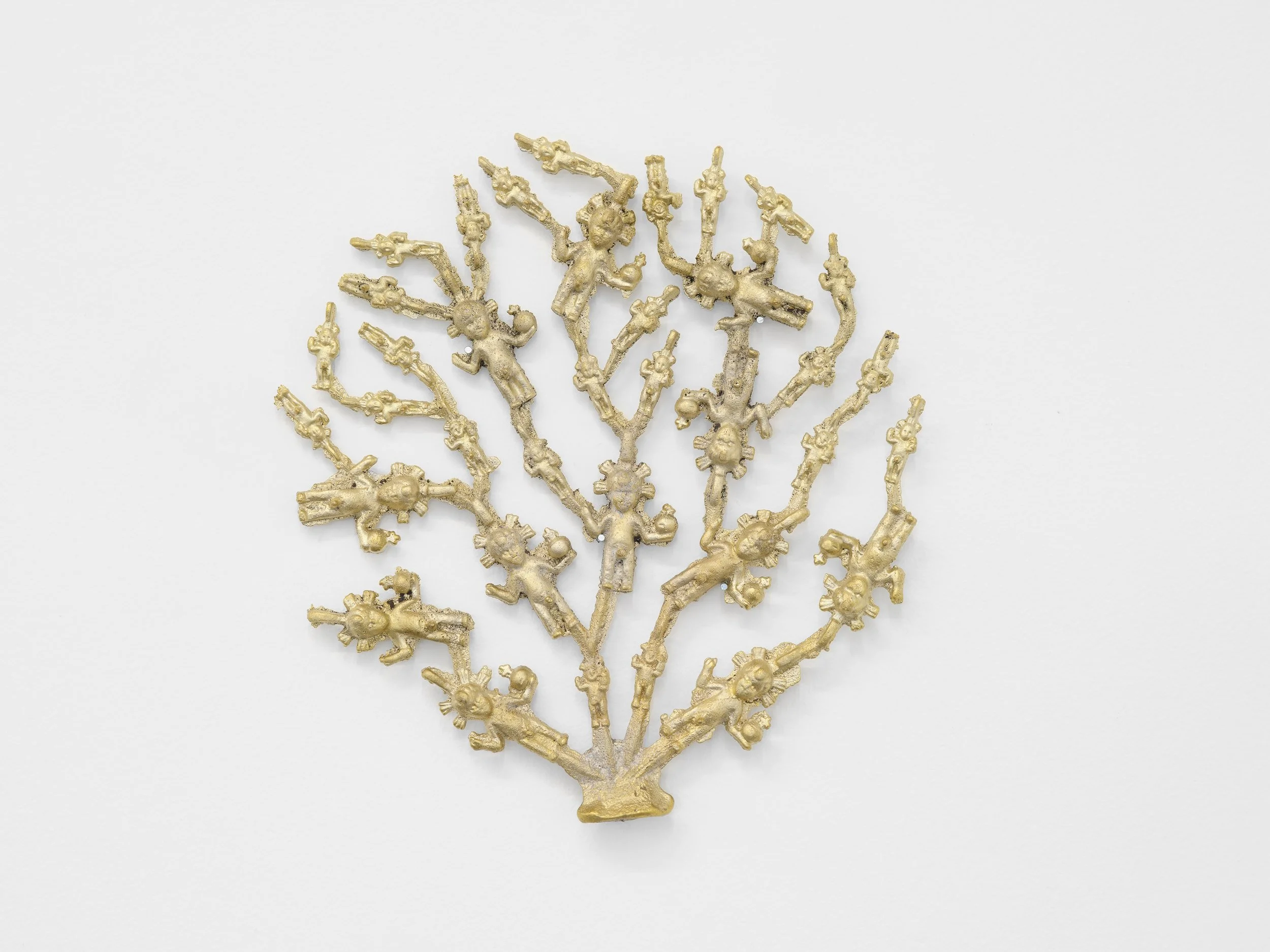
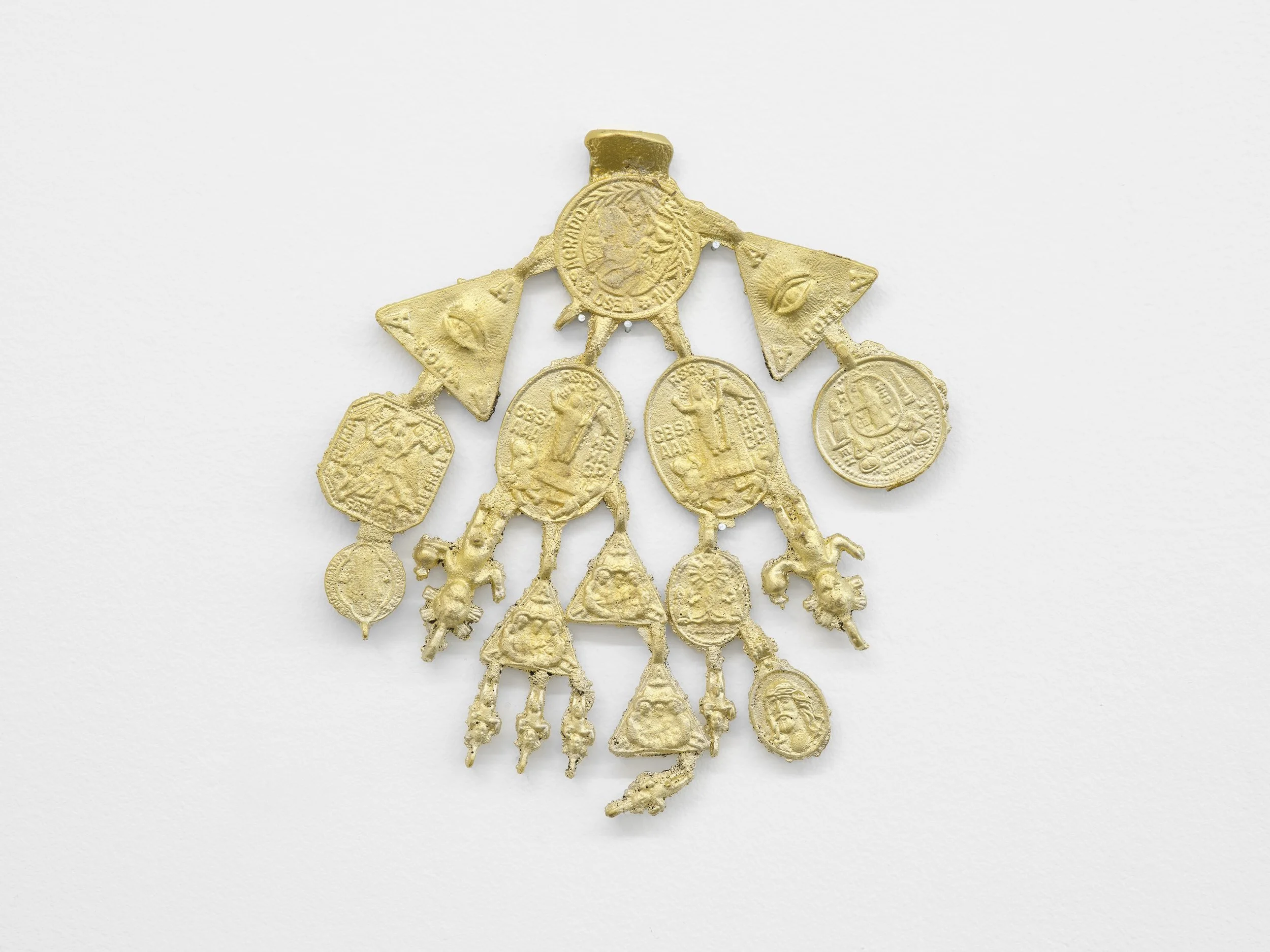
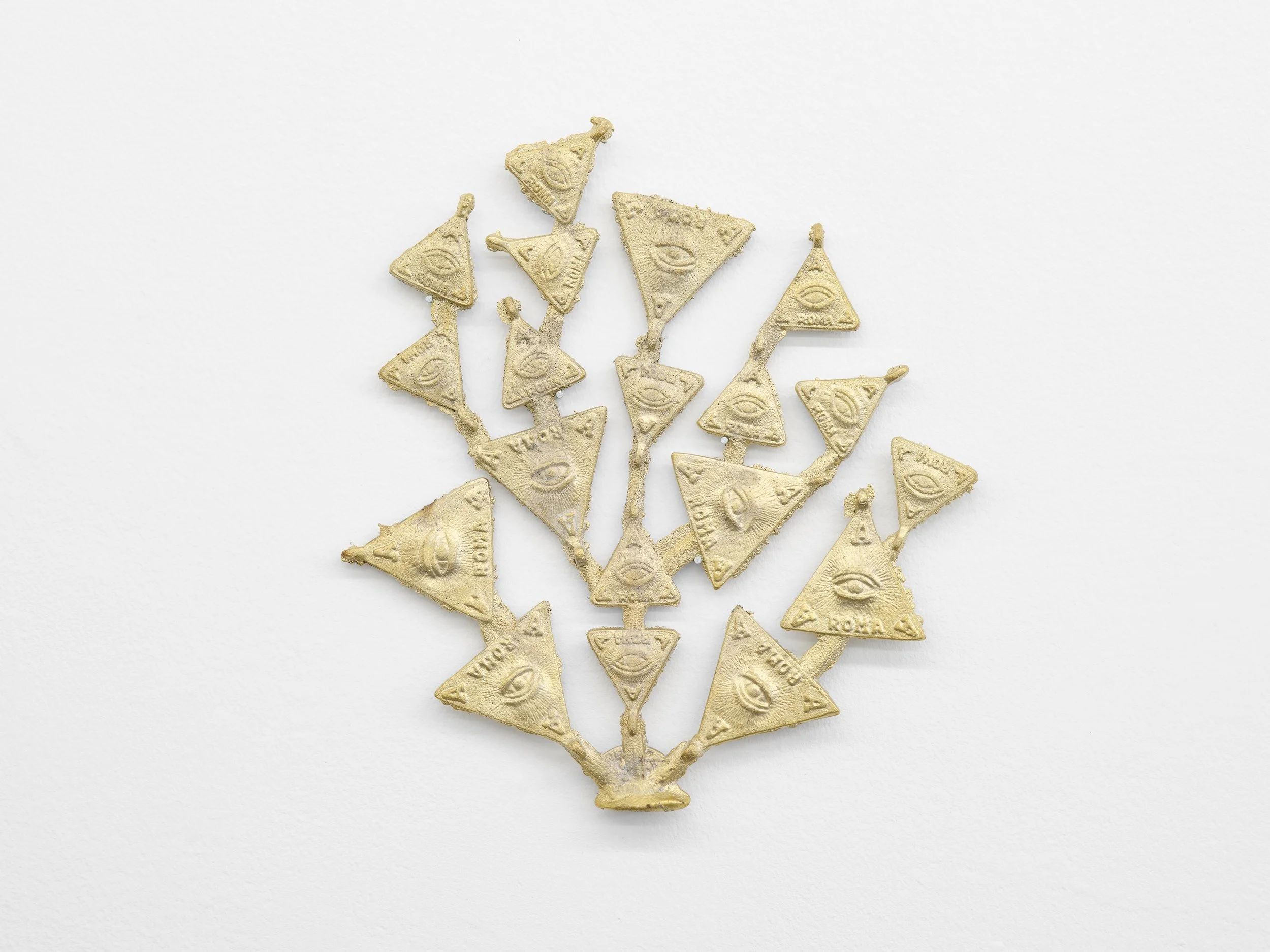
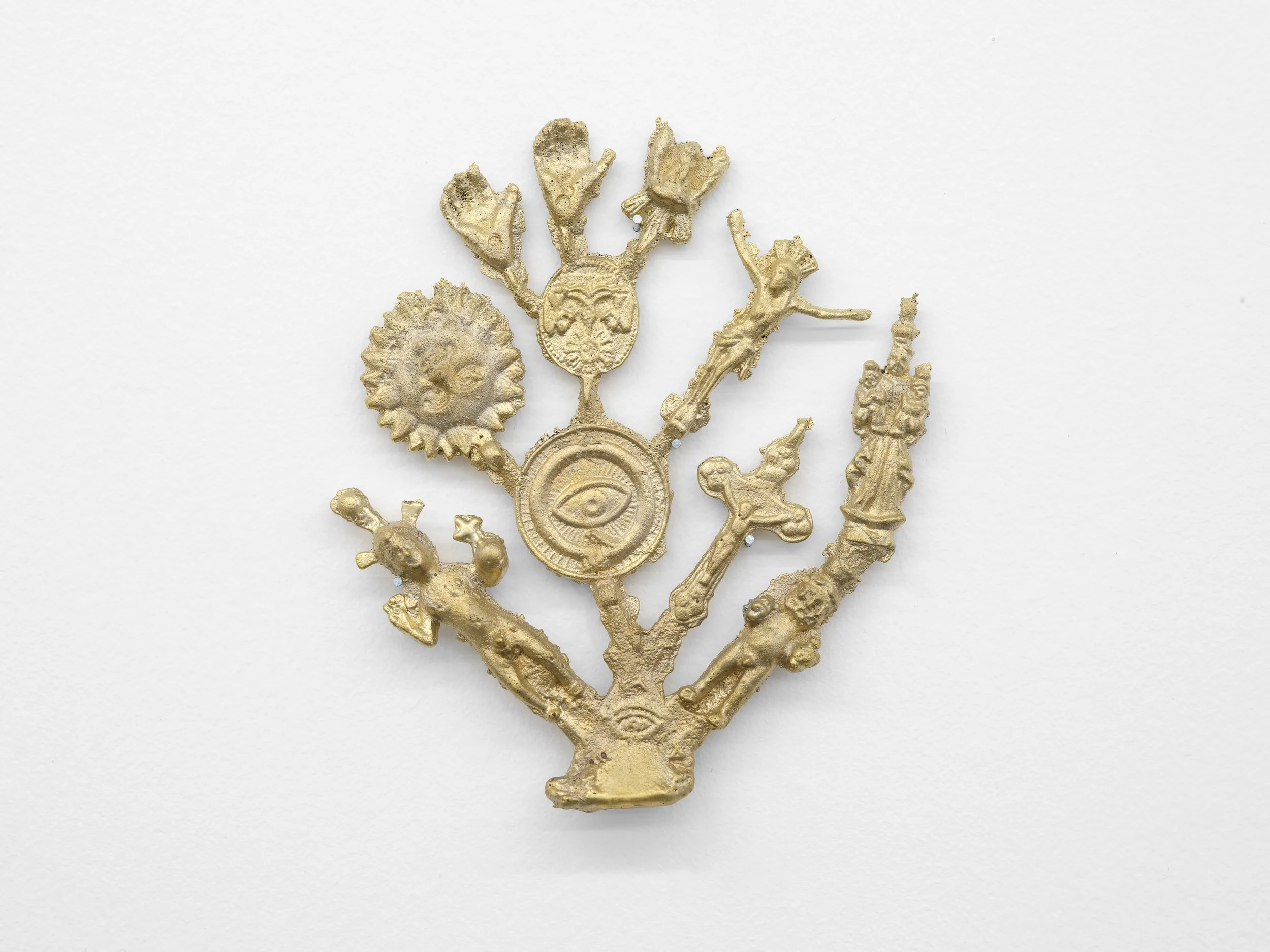
Geographies of Ghosts delves into the history and contemporary use of Filipino talismans—known in the Philippines as anting-anting. Historically, anting-anting were used by the Katipuneros, members of a secret revolutionary society composed of nationalists, intellectuals, and farmers who fought to overthrow more than three centuries of Spanish colonial rule from 1565 to 1898. These medallions, often inscribed with and prayed over, were believed to shield their bearers from bullets and wounds in battle. Armed only with bolos, the Katipuneros faced the Spanish military, equipped with guns and cannons, relying on these sacred objects for protection and empowerment.
Today, anting-anting are used by common folk and albularyos, or faith healers—a type of shamanic practitioner who heals spiritual illnesses and removes curses from people and places. Besides being available online, these talismans are sold around Quiapo Church in Manila, a site renowned for its convergence of Catholic devotion, alternative medicine, and occult and esoteric practices.
May 28 – June 20, 2026
Regular hours Thursday / Friday / Saturday 12-5 pm
Special thanks to Daniel Karrasch for his music and Jeff Hallbauer for hosting the project.
The creation of anting-anting medallions begins with regurgitated sand from an anthill, also known as nuno sa punso (old man of the mound), which in Filipino mysticism is believed to be the dwelling place of gnomes and other earth elemental beings[1]. Artisans in the field of anting-anting, like Kuya Aryel from Munting Pulo, Batangas employ traditional sand-casting methods to duplicate anting-anting from a mother mould. According to their stories, their ancestors melted sacred metals sourced from church surplus, such as brass chalices, service plates, reliquaries and church bells. These materials were believed to carry a powerful charge since they came from a place of worship and devotion, making the talismans more potent against negative forces and ill will.
Today, metals are now sourced from mambabakal or mga nangangalakal (scavengers), who sell metal parts and discarded brass materials from faucets, door hinges, copper tubes, and electrical wires. Contemporary anting-anting medallions sold in Quiapo today are made from these ordinary metals. Such medallions are called binge (deaf) because of the flat sound they make when struck together. However, the use of sacred metalwork can still be requested through specialist antingeros[2] who offer rare talismans made from church surplus. These specially cast medallions are more expensive, sometimes reaching four times the price of a regular anting-anting and a quality often boasted by these anting-antings possess a noticeable mataginting (clear, resonant, bell-like quality). Besides the common dilaw na tanso (brass) types, artisans also make pulang tanso[3] (copper), pilak (silver), and tres metals (three metals), a combination of all three metals.
LNK, or Lihim na Karunungan (Hidden Wisdom), is an umbrella term for practitioners of contemporary Filipino mysticism and magic—a shamanistic practice rooted in babaylan[4] Traditions and a byproduct of postcolonial folk spirituality that syncretizes Christian prayers and motifs along with precolonial belief systems.
The mythology and invoked deities in LNK stem from a mixture of pre-colonial origin myths and Christian parables. This was made accessible and brought to the mainstream by Filipino occultist Melencio T. Sabino, who wrote Karunungan ng Diyos (Wisdom of God) published in 1955. Most practitioners of LNK use some form of anting-anting; while other practitioners strictly use mutya[5], medals are the most common, and sometimes practitioners prefer the orasyon tattooed on their skin or worn as a shirt or handkerchief where the orasyon is drawn.
From whom an anting-anting is sourced determines whether it is considered alive, meaning activated through an orasyon (prayer or spell). Otherwise, it is regarded as tulog (asleep), an inert piece of metal with no imbued magic. Many buyers assume their anting-anting is kargado (charged), though the vendor must possess some level of poder (power) to activate it. Otherwise, the buyer would need to know how to activate the anting-anting.
Poder is usually gained through the ritual of debosyon (devotion), by practising multiple types of orasyon to build a foundation of magical strength and to wield it. Each orasyon has different levels of potency, which require different levels of poder from the practitioner. A neophyte in LNK may only be able to work weaker spells or orasyones, while seasoned practitioners can perform more complex and powerful magic.
In LNK there are four main types of oryasyon that needs to be established by the practitioner, besides the cultivation of poder, pondo (foundation), bakod (fence) and balabal (shroud) are equally important facets in wielding magic. Each aspect enables the practitioner to safely draw energy, store and use it while being protected from malevolent energy and forces. The use of bakod and balabal resonates with Western occult systems that use a banishing pentagram to create a safe space before any ritual is done.
An Albularyo[6] I followed was Bulacan-based faith healer ISMATAC INATAC, who is known for his Facebook live, gun-breaking anting-anting[7]. Literally breaking and jamming the guns before it fires at the anting-anting. An annual tradition among antingeros is to test their anting-anting at firing ranges during Holy Week. They hang their anting-anting on a post or a target, and in some cases, guns are tested on live animals[8] or on the practitioners themselves while wearing the anting-anting. In one instance, ISMATAC INATAC demonstrated the efficacy of his anting-anting and pointed a loaded gun at their palm and tried to fire it, but the gun jammed. This quality of bertud is called pamigil (restraint) because it prevents the weapon from firing. Other forms of bertud include tagaliwas (deviation), which causes bullets to stray from their target, and rebuelta (recoil), which deflects and returns bullets or spells to the sender.
Another specialized bertud is kabal (skin strength). Antingeros test their kabal by slicing their skin with bolo knives or samurai swords without bleeding or sustaining a wound. Interestingly, the aspiration to be protected from bullets and knife cuts is no coincidence. It is rooted in the 333-year-long occupation of Spain in the Philippines from 1565 to 1898 and the resistance that helped emancipate it. The Katipuneros – a secret revolutionary society consisting of a mix of nationalists, intellectuals and farmers who fought to dethrone the Spanish Empire were known to have carried and used anting-anting during their battles. Since the Katipuneros only wielded bolos, a precolonial sword used for farming and hunting, the Spanish military had modern guns and cannons. For the Katipuneros, the anting-anting evened the battlefield.
Not all anting-anting pass these tests. Some are destroyed, while others sustain only a small dent from a .45 caliber bullet. There have also been historical accounts[9] of antingeros being shot and killed despite the strong belief that their anting-anting would protect them. This depends on the poder of the antingero who charged the talisman as well as the poder of whomever is trying to counter it.[10] Each antingero has their own arsenal of orasyon[11], and some combine different prayers into a testamento (testament), a more distilled and extended form of invocation.
Like any resource that could be exploited, this knowledge can be used for benevolent or malevolent purposes, entangling LNK with healing, charming, enchanting, cursing, and hexing and, in some cases, death. Besides alternative forms of healing, the Philippines is also known to have powerful practitioners of kulam (curse), often referred to as mangkukulam (sorcerer or witch). People hire a mangkukulam for many purposes; sometimes they are hired to charm someone to fall in love or get their lover back or to get revenge and cause unfathomable illness. A type of high-level curse is called barang in which the mangkukulam uses the aid of an insect to deliver the illness. When the insect arrives at the target's house, it enters the body through either the nose or the mouth of the target. Once this happens, the target will surely fall ill and eventually lead to death if not healed promptly. Unfortunately, the practice of hexing, cursing, and causing illness is often more lucrative than healing.
[1] “The (Elemental Beings) Nature Spirits are sometimes visible to the human eye, but can be controlled only by those who are rulers of the elements in which these elementals live. Man’s mastery of the elements, therefore, gives him dominion over these kingdoms. According to the ancients, the elementals were originally under the dominion of the Adamic man and are always subject to the one who is master of their element. They serve sincerely, though they do not realize or recognize the needs of the race they serve.” Manly P. Hall, “Natural Principles” chapter 2, Unseen Forces, Philosophical Research Society, INC. 1960, p. 18
[2] A practitioner or user of anting-anting. Not all antingeros are healers necessarily.
[3] Pula, pulang tanso or red copper medallions are usually more expensive and time-consuming to make since copper has a higher melting point than brass. It also cools faster which restricts mass production and requires the artisan to be more precise with timing. Metaphysically, it is also believed that copper has a faster chance of getting powers imbued through prayers and isn’t easily contaminated by negative energies like the dilaw na tanso (brass) counterpart.
[4] Babaylan often refers to an Indigenous spiritual leader or shaman across the archipelago of the Philippines. With varying names like mumbaki, maaram, etc, depending on the region. They are mediators between the spirit and material world and often possess the power to heal. The role of Babaylans is often passed down through a bloodline, but in some rare cases, one can be trained to be one.
[5] Mutya are classified as another form of anting-anting that is often referred to as talismans from nature, such as stones, seeds, shells, fossils, sacred types of wood, bones, and crystals.
[6] Derived from the Spanish word herbolario or witch doctor, an albularyo is a contemporary term used to identify a faith healer or folk doctor who removes curses, prescribes home remedies and sometimes exorcises malevolent spirits from a patient.
[7] There are many ways to test whether an anting-anting possesses karga (charge) or bertud (inherent strength).
[8] I personally witnessed a live test using a high-powered CO2 air gun on a chicken. The anting-anting was taped beneath its wing before the animal was shot at close range with a slug filled with aluminum projectiles. Although less lethal than a firearm, the chicken showed no injury and continued walking, startled only by the deafening burst of pressure from the air gun.
[9] Cultist vigilantism often forms and emerges out of resistance and dismay to the government. There have been numerous accounts where military and cultist members clash. Incidents like the Tadtad group in 2000 and the Dinagat Islands shootout in 2002.
[10] A legendary local Robin Hood-type bandit and antingero named Nardong Putik who wrecked havoc in the late 40’s famously evaded capture and survived numerous shootouts. Legend says that one of the cops who apprehended and shot Nardong Putik had a stronger anting-anting. In the energy world, big fish eats small fish.
[11] Like the visual designs of anting-anting, there is no clear origin for these orasyones, which combine Latin, Tagalog, Aramaic, Greek, pidgin, and Engkanto (spirit) language, often received through dreams or meditation.